
Artificial intelligence is moving faster than most people or institutions can comfortably process. Governments are regulating it, brands are integrating it, and entire industries are rethinking how work gets done. But one of the most interesting voices that recently entered the conversation isn’t coming from Silicon Valley, it’s coming from the Vatican.
Pope Leo’s emerging perspective on AI reflects something many businesses and individual users are beginning to recognize: innovation without human accountability can quickly lose its direction.
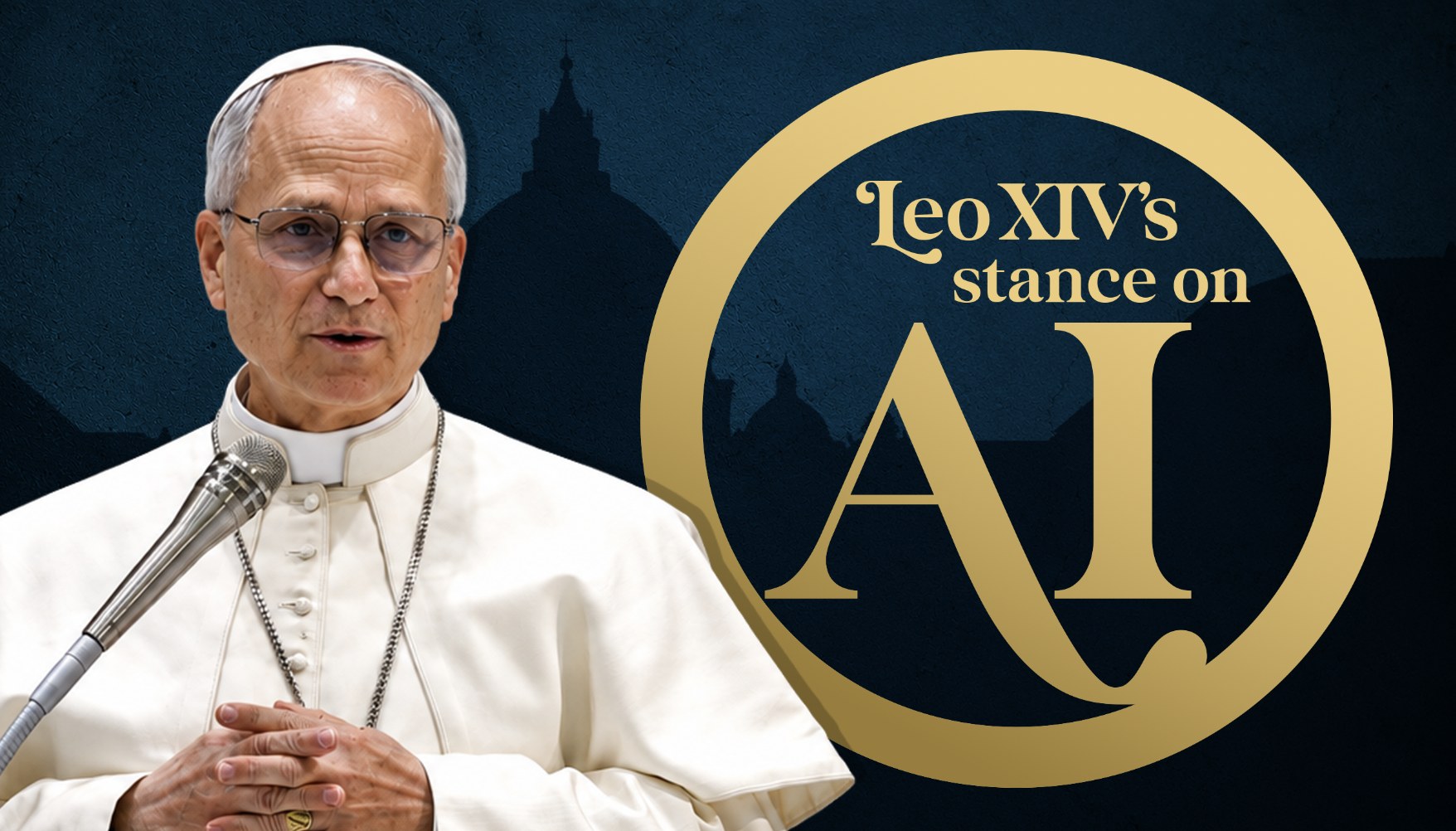
At The Lemon Ad Stand, we’ve been paying close attention to how leaders across technology, ethics, and culture are framing the future of AI. And while the conversation often swings between excitement and fear, Pope Leo’s position introduces a more balanced approach, one that prioritizes human dignity, creativity, and responsibility alongside technological advancement.
That’s also where we, The Lemon Ad Stand, stand. We believe AI is a powerful tool, but not a replacement for human thinking or relationships. Our mission is to help you make the world sweeter. It guides every interaction we have with our clients, how we approach our work and of course, how we integrate AI into our processes.
Why Pope Leo’s AI Perspective Matters
Religious leaders haven’t traditionally shaped conversations around emerging technology, but AI is different. Its influence extends beyond productivity and automation into ethics, communication, labor, creativity, and even human identity.
Pope Leo’s commentary centers around a key concern: technology should serve humanity, not the other way around.
That principle may sound philosophical, but it has very practical implications for businesses today. AI can generate content, analyze data, automate workflows, and accelerate decision-making. But without human oversight, it can also spread misinformation, dilute originality, reinforce bias, and create experiences that feel disconnected from real people.
In marketing especially, authenticity still matters. Consumers are becoming increasingly aware of AI-generated content. We can tell when messaging feels generic, overly optimized, or emotionally hollow. The brands that stand out are the ones using AI to enhance human creativity rather than replace it.
The “Human in the Loop” Approach
The phrase “human in the loop” has become increasingly important in conversations around responsible AI usage. It refers to systems where humans remain actively involved in reviewing, guiding, and refining AI outputs rather than handing over full control.
For us, this isn’t just a technical framework. It’s a creative philosophy.
At The Lemon Ad Stand, we use AI the same way we use any modern tool: strategically. It helps accelerate research, organize ideas, streamline workflows, and uncover insights. But the strategy, storytelling, design thinking, and brand voice still come from real people.
That distinction matters.
AI can produce volume. Humans create connection.
And connection is ultimately what marketing is about.
AI in Marketing: Efficiency vs. Originality
There’s no denying that AI is reshaping the marketing industry. Brands are automating their social media responses, web chatbots and even customer service lines. Predictive analytics and creative production tools are optimizing our workflows. We’re producing and optimizing faster than ever.
But speed alone isn’t a competitive advantage anymore.
As more brands flood digital spaces with AI-assisted content, originality becomes even more valuable. Businesses that rely too heavily on automation risk sounding exactly like everyone else and less like themselves.
That’s why human oversight remains essential in areas like:
- Brand storytelling
- Creative direction
- Emotional nuance
- Cultural awareness
- Ethical decision-making
- Strategic positioning
AI can support these processes, but it shouldn’t define them. The strongest brands in the next decade won’t be the ones using the most AI. They’ll be the ones using it most intentionally.
What Businesses Should Be Thinking About Right Now
For startups experimenting with AI tools or an established company integrating automation into operations, the conversation around responsible implementation is only becoming more important.
Here are a few questions worth asking:
Are we using AI to improve experiences or just increase output?
Efficiency matters, but not at the expense of authenticity, quality or trust. Your brand still has to sound and show up in its authentic voice.
Does our content still sound human?
If your messaging loses personality, perspective, or emotional intelligence, audiences notice. AI has “tells” and frequent AI users and analysts notice them. It started with the em dash, then it became “whether”. The model is designed to learn so you have to double check every word to ensure the content flows and feels like it’s your brand.
Who is accountable for AI-generated work?
Human review processes are becoming critical for maintaining accuracy, ethics, and brand consistency. If AI writes all the code for a website, who is accountable for security breaches? Hint, it’s probably the agency who used the code.
Are we protecting creativity or replacing it?
AI should create more space for strategic thinking and innovation, not eliminate the human ideas that make brands memorable. Creativity is the best part of what we do here, we’d never want to outsource it to a bot. AI can’t taste your product, or feel the real impact a program brings into a classroom. We need to have experiences to fuel our creativity and create the marketing plans and creative that will resonate with your users. Don’t replace creativity. This is a hard line for us.
The Future of AI Is Collaborative
The conversation around AI often becomes polarized. Some see it as a threat. Others treat it like a cure-all for productivity and growth.
Reality is probably somewhere in the middle.
Pope Leo’s stance reflects a broader movement toward responsible innovation, one where technology remains aligned with human values rather than operating independently from them.
We agree with that direction.
At The Lemon Ad Stand, we see AI as a collaborator, not a substitute. The future of marketing still depends on human creativity, emotional intelligence, and strategic thinking. AI can amplify great ideas, but it still takes people to create ideas worth amplifying.
And honestly, that’s the exciting part. Because while tools evolve, human connection remains the foundation of every meaningful brand experience.